Skip to the story

Shopping notes on tools, kitchens and the smart home

TierWay.net

Tag: Anker

Our Anker coverage runs to 39 reviews across Power & Outdoors, Electronics and Tools & Garden, with the listed specification and our score out of 10.

24 guides

Power & Outdoors

Anker High-Wattage Power Bank Comparison: Specs, Output, and Ports

Searching for an anker 165 watt power bank usually reflects a clear technical goal: supplying sustained, high-wattage power to demanding laptops without throttling or multi-device brownouts. While Anker does not manufacture an individual portable battery with a static 165W single-port label, the brand covers this tier using advanced USB Power Delivery 3.1 architecture delivering between…

6 models Our score: 9.4/10 Anker

Electronics

Anker Outdoor Projector Comparison: Resolution, Lumens, and Hardware Specs

Selecting an effective anker outdoor projector requires analyzing the interplay between light output, optical resolution, and energy delivery. Outdoor projection environments present distinct physical challenges that indoor media rooms avoid, specifically ambient light wash, variable throw distances, and access to dedicated power circuits. In our anker projector comparison, lumen output dictates whether an image remains…

5 models Our score: 9.2/10 Anker

Power & Outdoors

Anker Power Bank Technical Breakdown: 10K vs 20K Capacity and Output Analysis

Selecting the right anker power babk requires evaluating device wattage requirements, carry weight, and battery capacity. Modern external batteries function as smart power distribution hubs supporting universal USB Power Delivery protocols. Choosing the right pack means determining whether your devices need 20V charging profiles for laptops or lighter 5V to 9V delivery for fast smartphone…

6 models Our score: 9.2/10 Anker

Electronics

Anker USB-C Charger Block Breakdown: Power Profiles & Port Allocations

Selecting an effective anker dual usb c charger block requires evaluating power negotiation standards, peak single-port output ceilings, and concurrent wattage distribution rules. Many multi-port wall units reduce voltage or split currents in ways that drop devices out of rapid-charging states when a second peripheral is connected. Understanding how internal power-distribution controllers handle stepping down…

6 models Our score: 8.2/10 Anker

Electronics

Anker Dual-Port and Multi-Port Charger Specifications Compared

When selecting an anker dual port charger, the core technical decision comes down to matching your device ecosystem’s wattage thresholds against the charger’s port topology and power allocation rules. Anker manufactures a diverse array of multi-port wall adapters, ranging from basic legacy USB-A units engineered for low-draw accessories to advanced Gallium Nitride (GaN) architectures that…

6 models Our score: 8.8/10 Anker

Power & Outdoors

Anker Power Banks for Tablets: Technical Specs and Output Comparison

Finding the right anker power bank tablet charging solution requires evaluating single-port wattage output, battery capacity, and physical form factors. Tablets feature substantially larger batteries and higher screen power draws than smartphones, demanding stable USB Power Delivery output to replenish energy while handling active workloads. Without adequate wattage negotiation, high-draw tablets either charge at a…

6 models Our score: 9.0/10 Anker

Power & Outdoors

High-Capacity Anker Portable Chargers Compared: Wattage, Wh, and Specs

Selecting an anker portable charger huge power configuration requires evaluating sustained continuous wattage, dual-port recharging capabilities, and internal battery chemistry rather than glancing solely at nominal milliamp-hour numbers. High-demand mobile workstations, creative setups, and multi-device travel gear require charging banks engineered with Power Delivery 3.1 circuitry capable of outputting 140W through an individual USB-C port…

6 models Our score: 9.2/10 Anker

Power & Outdoors

Anker Power Pack Breakdown: Technical Comparison of 6 Leading Models

Selecting an anker power pack requires balancing energy density, sustained wattage throughput, and thermal dissipation over nominal cell capacity alone. Modern portable chargers have transitioned from simple lithium-ion storage cells to sophisticated power management systems. Today’s hardware negotiates Power Delivery protocols, executes Qi2 magnetic transfers, and integrates advanced thermal barriers like aerogel and graphene to…

6 models Our score: 9.4/10 Anker

Power & Outdoors

Anker 200W+ Power Bank Spec Breakdown: High-Wattage Models Compared

Selecting an anker 200w power bank requires understanding how high-output portable chargers allocate continuous wattage across individual ports versus total system capacity. High-performance laptops require significant input current, with demanding systems drawing up to 140W via USB Power Delivery 3.1 to sustain peak processing loads while recharging. When you connect secondary hardware like tablets, phones,…

6 models Our score: 9.4/10 Anker

Electronics

Anker 160W Charger Breakdown: Multi-Port Power Allocation and GaN Benchmarks

Selecting the ideal high-output power adapter requires balancing raw wattage, physical volume, thermal dissipation, and dynamic power distribution. The flagship anker charger 160w architecture represents a major step forward in power density, providing up to 140W over a single USB-C connection while powering secondary devices simultaneously. Modern USB Power Delivery protocols demand precise handshake management…

6 models Our score: 8.2/10 Anker

Electronics

Anker 240W USB-C Cable Comparison: Power Delivery, Speed, and Durability Specs

Selecting the appropriate anker 240w cable requires analyzing power delivery protocols, internal wiring configurations, and physical durability ratings. While all 240-watt cables utilize USB Power Delivery 3.1 Extended Power Range (EPR) circuitry to negotiate up to 48 volts at 5 amperes, their underlying physical architectures differ substantially. Some models prioritize extreme mechanical flex lifespans with…

6 models Our score: 9.2/10 Anker

Power & Outdoors

Anker 25K & High-Capacity Power Bank Comparison: Spec Analysis

Finding the right portable power source in the high-capacity bracket requires evaluating sustained wattage delivery, port allocations, and electrical energy density. When evaluating an anker power bank 25 option or adjacent high-capacity solutions, technical buyers must look beyond headline milliamp-hour numbers to understand how energy is distributed under heavy simultaneous workloads. Selecting an anker 25000…

6 models Our score: 9.0/10 Anker

Electronics

Anker USB-C PD Charger Breakdown: Wattage, Ports, and Protocols

Selecting an effective anker charger pd configuration requires matching hardware wattage ceilings, protocol standards like Programmable Power Supply (PPS), and dynamic port-splitting logic to your specific hardware rotation. Power Delivery negotiation governs whether an ultraportable laptop charges at full speed under heavy workloads, whether a smartphone negotiates rapid top-up profiles, or whether multi-port configurations trigger…

6 models Our score: 9.2/10 Anker

Power & Outdoors

Anker Home Power Generators Compared: Specs, Inverters, and Backup Runtime

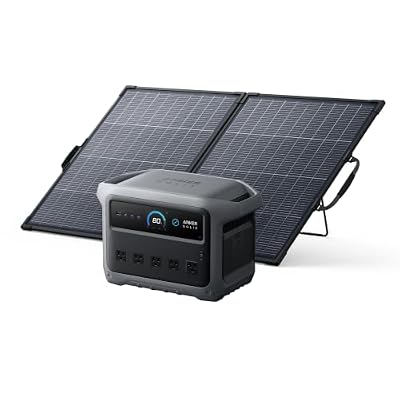
Choosing an anker power generator for home backup requires evaluating load requirements, inverter surge limits, and continuous output demands during grid interruptions. Homeowners seeking an anker power generator comparison need to distinguish between compact battery stations intended for small electronics and heavy-duty split-phase units capable of powering 240V heavy appliances like clothes dryers, well pumps,…

6 models Our score: 9.8/10 Anker

Electronics

Anker Charging Adapter Spec Breakdown: Ports, Wattage, and Form Factors

Selecting the right anker charging adapter requires matching the power delivery protocol, voltage curves, and port wattage caps to your specific hardware setup. Anker utilizes varied internal topologies ranging from high-frequency Gallium Nitride (GaN) switching circuits to multi-rail silicone controllers, each engineered around specific device power envelopes. Modern smartphones typically draw between 20W and 30W…

5 models Our score: 9.8/10 Anker

Power & Outdoors

Compact Anker Power Bank Lineup: Detailed Technical Breakdown

Selecting the right anker compact power bank requires evaluating energy density, thermal efficiency, port configurations, and protocol compatibility. Modern portable chargers have moved far beyond generic external batteries, incorporating dedicated power delivery controllers, integrated stress-tested cabling, and advanced magnetic wireless arrays. Whether you require a pocket-sized cell for emergency evening power or a dense battery…

6 models Our score: 9.4/10 Anker

Power & Outdoors

Anker Power Bank Spec Comparison: Capacity, Port Speeds, and Output Analyzed

Selecting the right portable battery pack requires evaluating capacity reserves, multi-port power allocation, and thermal dissipation systems across demanding hardware profiles. When comparing options for an anker portable power bank, functional efficiency depends on whether your workflow prioritizes high-wattage laptop charging, pocketable everyday carry, or Qi2 magnetic inductive coupling. Technical buyers searching for an ankr…

6 models Our score: 9.2/10 Anker

Power & Outdoors

Flight-Ready Anker Power Banks: Watt-Hour and Output Specs Compared

Aviation security agencies including the Federal Aviation Administration and the Transportation Security Administration enforce a strict 100 watt-hour threshold on lithium-ion batteries packed into passenger carry-on luggage without prior carrier authorization. Checking any loose lithium battery pack into the cargo hold remains universally prohibited due to thermal runaway hazards at high cruising altitudes. Finding an…

6 models Our score: 9.4/10 Anker

Electronics

Anker Charging Station Lineup: Technical Specifications and Port Analysis

Selecting an anker station charging hub requires an evaluation of thermal thresholds, dynamic port balancing, and peak Power Delivery ceilings. Modern multi-device desks frequently suffer from charging bottlenecks when multiple high-draw peripherals connect simultaneously. Anker addresses these power negotiation challenges by deploying Gallium Nitride (GaN) architecture, PowerIQ intelligent current allocation, and dedicated wireless cooling systems…

6 models Our score: 9.8/10 Anker

Power & Outdoors

Newest Anker Power Bank Lineup: Spec-by-Spec Comparison

Selecting an anker power bank newest model requires evaluating the electrical interface between the portable cell and your connected device hardware. Looking strictly at overall milliamp-hour capacity often leads to mismatches in charging speed and thermal throttling. In any comprehensive anker power bank comparison, single-port output limits, protocol negotiation capabilities, and concurrent port power distribution…

6 models Our score: 9.0/10 Anker

Power & Outdoors

Anker Laptop Power Bank Breakdown: Wattage, Wh, and Port Specs Analyzed

Selecting the right anker laptop charger power bank requires matching your computer’s voltage profiles, single-port power delivery thresholds, and total battery watt-hour ratings. High-performance portable computers demand stable USB Power Delivery (USB-PD) contracts, requiring 65W for standard ultrabooks and up to 140W under the newer USB-PD 3.1 Extended Power Range (EPR) standard to run intense…

6 models Our score: 9.2/10 Anker

Power & Outdoors

Anker Portable Charger & Power Bank Comparison: Technical Breakdown

Selecting an anker portable chargers power bank requires analyzing energy density, protocol compatibility, and dynamic wattage distribution. Modern devices require specific voltage profiles, where inadequate wattage causes prolonged recharging intervals or performance throttling. Matching port output and battery capacity to device requirements ensures your hardware charges efficiently away from grid power. This technical anker portable…

6 models Our score: 9.4/10 Anker

Electronics

Anker 140W Charger Breakdown: Single-Port Output and Multi-Device Power Analysis

Selecting an anker charger 140 requires understanding how the USB Power Delivery 3.1 Extended Power Range standard allocates high-wattage power. Demanding laptops require a steady 28V at 5A across a single connection to sustain peak charging speeds without thermal throttling during heavy processing loads. Many multi-port bricks divide power across channels as soon as a…

5 models Our score: 8.2/10 Anker

Electronics

Anker Desk Charging Stations Compared: Wattage, Ports, and Protocols

Selecting an anker desk charging station requires evaluating total wattage ceilings, port distribution matrices, and individual terminal power delivery curves. Modern workspaces contain diverse hardware mixes, ranging from laptops demanding 140W Power Delivery 3.1 connections to mobile accessories requiring modest 5W trickle power. When assessing an anker desk charging station comparison, technical buyers must examine…

5 models Our score: 9.6/10 Anker