YoLink Window Sensor Comparison: Technical Specifications and Hardware Analysis
Deploying a yolink window sensor ecosystem across residential or commercial structures resolves the primary physical limitation of legacy smart security: signal attenuation through concrete, structural masonry, and multi-story framing. Traditional consumer telemetry protocols rely on 2.4 GHz frequencies that experience severe packet degradation when encountering low-emissivity window glass framing and insulated building materials. YoLink hardware…

As Amazon Associates, we earn from qualifying purchases. This means we may receive a small commission at no extra cost to you if you click through and make a purchase.
Deploying a yolink window sensor ecosystem across residential or commercial structures resolves the primary physical limitation of legacy smart security: signal attenuation through concrete, structural masonry, and multi-story framing. Traditional consumer telemetry protocols rely on 2.4 GHz frequencies that experience severe packet degradation when encountering low-emissivity window glass framing and insulated building materials. YoLink hardware bypasses these constraints by implementing proprietary Semtech LoRa modulation operating within the unlicensed 900 MHz ISM spectrum. This architecture provides high receiver sensitivity and an extraordinary link budget capable of maintaining long-range communication links across extreme spatial footprints. Selecting the proper sensor hardware requires analyzing whether your window perimeter defense demands magnetic gap displacement monitoring, structural surface vibration detection, integration with hardwired auxiliary dry contacts, or secondary environmental condensation tracking.
This yolink window sensor comparison analyzes exactly four specialized hardware models manufactured by YoLink to isolate their functional boundaries and mechanical advantages. These four models encompass the standard magnetic YoLink Door & Window Sensor (model YS7704), the high-sensitivity YoLink LoRa Smart Vibration Sensor; Smart for shock detection, the weatherproof Long-Range Indoor Outdoor Door Window Gate contact sensor (model YS7707), and the YoLink Weatherproof Fluid temperature monitoring sensor for thermal window envelope tracking. Across this guide, we evaluate operational radio characteristics, physical enclosure durability, power distribution specifications, and automation topologies to identify which yolink window sensor to buy for your structural floor plan.
Which YoLink Window Sensor Should You Buy
- Standard interior casing and multi-window fenestration: select the YoLink Door & Window Sensor for low-profile 3M adhesive installation and door-ajar supervisory tracking.
- Glass-break, structural tamper, and forced-entry deterrence: select the YoLink LoRa Smart Vibration Sensor; Smart to detect physical glass impact and surface movement before sash displacement occurs.
- Weather-exposed window casings, wide-gap casement sashes, and external hardwired reed loops: select the Long-Range Indoor Outdoor Door Window Gate with its 0.7-inch magnetic sensing tolerance and dry contact input screw terminals.
- Window thermal insulation efficiency, condensation monitoring, and sill freeze risk: select the YoLink Weatherproof Fluid sensor to capture real-time temperature fluctuations across the windowpane envelope.
YoLink Door & Window Sensor

Buyer favouriteScored 9.4/10 or higher
Price not listed
Our score: 9.4/10Overwhelmingly positive
Brand YoLink ASIN B083YYHC7M
Best for: Standard indoor window and door monitoring
Pros
- Quarter-mile LoRa wireless range
- Two-year battery operational lifespan
- Local device-to-device offline pairing
Cons
- Indoor casing lacking weatherproofing
- Hub required for remote notifications
The YoLink Door & Window Sensor serves as the foundational perimeter monitoring device within the brand’s ecosystem, engineered specifically for interior residential and commercial openings. Operating under model designation YS7704, this unit utilizes standard magnetic reed switch displacement to detect when a window sash moves away from the stationary frame. Powered by a 3-volt battery power source delivering a 2-year average battery life, the sensor communicates using wireless LoRa technology across the 900 MHz band. This configuration yields a yolink lora open air range reaching up to 0.25 miles (a quarter-mile), enabling reliable transmission through subterranean basements, thick framing, and detached structures where conventional wireless equipment fails. While readers analyzing high-density setups might also review our simplisafe entry sensor analysis for architectural contrast, this YoLink unit separates itself through superior obstruction penetration without signal repeaters.
Deployment is handled via pre-applied 3M brand mounting tape following a rapid QR code scan within the mobile application. The internal firmware provides 24/7 cloud server supervision that constantly polls the physical hardware to verify online presence, transmission link strength, and operating cell voltage. A core utility for fenestration security is the configurable Door Left-Open reminder, which allows homeowners to define an operational duration limit; exceeding this threshold triggers mobile application push notifications or initiates audible chime playback across an optional audio SpeakerHub. Furthermore, the unit supports yolink device to device pairing sensor functionality, known as YoLink Control. This capability enables direct local communication with auxiliary sirens or alert modules, ensuring local alarms actuate immediately upon sash displacement even during full broadband or utility grid blackouts.
This model suits homeowners, tenants, and facilities supervisors seeking clean interior installation across double-hung, sliding, or awning windows without invasive structural modification. It excels in uniform indoor spaces where standard magnetic alignment is straightforward. However, the yolink door and window sensor ys7704 gives way to the heavier outdoor-rated contact sensor when installation surfaces are subject to direct atmospheric precipitation, or where physical window gaps exceed standard residential tolerances and require external terminal wiring.
- Pre-applied 3M adhesive mounting tape for rapid tool-free window installation
- Proprietary 900 MHz LoRa wireless transmission supporting up to 0.25 miles of open-air coverage
- 24/7 cloud server device supervision reporting battery life, online status, and signal strength
- Offline device-to-device local pairing allowing automatic siren actuation without internet connectivity
YoLink LoRa Smart Vibration Sensor; Smart

Price not listed
Our score: 8.0/10Mostly positive
Brand YoLink ASIN B09BKKQ7RQ
Best for: Glass break and shock detection
Pros
- Detects physical glass impact vibrations
- 400-meter LoRa transmission radius
- Standalone pairing to sirens and fobs
Cons
- Lacks magnetic contact reed switch
- Listing specifies 230-volt operational rating
The YoLink LoRa Smart Vibration Sensor; Smart approaches fenestration defense from an acoustic and structural impact perspective rather than magnetic separation. Operating as a shock, movement, glass break, and tamper detector, this 0.06 kg white enclosure adheres directly to window glass surfaces, fixed frame members, or high-value access points. The product listing specifies battery-powered operation utilizing alkaline cells alongside a listed voltage rating of 230 volts. By continuously evaluating physical surface oscillations, the hardware provides an immediate intrusion alarm at the precise moment a window pane experiences blunt trauma, impact fracture, or mechanical jimmying, well before the sash itself slides away from the frame.
Transmission reliability matches the broader ecosystem, offering a maximum communication distance of 400 meters (1/4 mile open air range) powered by LoRa radio frequency technology. The sensor requires a YoLink hub connected to an Android or Apple smartphone via wired ethernet or a 2.4 GHz Wi-Fi network to transmit email, SMS, and mobile push notifications during off-normal events. Like its magnetic contact siblings, the unit incorporates local device-to-device pairing. Homeowners can link this yolink vibration sensor glass break detector directly to indoor or outdoor YoLink sirens and manage system armed states using optional hardware accessories like the FlexFob, AlarmFob, or SirenFob without needing live Wi-Fi or mains power. For broader whole-home automation designs, pairing perimeter tripwires alongside video verification platforms like those detailed in our wyze motion camera breakdown offers comprehensive coverage.
This vibration detector suits high-risk ground-floor windows, display cases, basement light wells, and fixed architectural panes that do not open on a track. Because standard contact switches remain inert if glass is shattered without moving the sash, this shock sensor provides the critical primary acoustic barrier. It yields precedence to magnetic contact sensors, however, when monitoring everyday ventilation habits, since it cannot detect whether a window has been left cracked open by an occupant on a calm afternoon.
- Multi-purpose structural sensing supporting glass break, shock, tamper, and movement detection
- 400-meter (1/4 mile) LoRa wireless communication radius with obstruction penetration
- Offline device-to-device pairing capability for direct siren triggers during power outages
- Multi-channel notification delivery supporting email, SMS text, and mobile app push alerts
Long-Range Indoor Outdoor Door Window Gate

Price not listed
Our score: 9.0/10Very positive
Brand YoLink ASIN B0HDZX2QQX
Best for: Exterior windows and dry contact relays
Pros
- Wide 0.7-inch magnetic sensing distance
- Dry contact closure terminal support
- Weatherproof indoor and outdoor housing
Cons
- Bulkiest enclosure among contact models
- Open-air range unspecified in listing
The Long-Range Indoor Outdoor Door Window Gate contact sensor (model YS7707) delivers industrial-grade physical versatility for high-tolerance architectural openings. Designed specifically for reliable operation in both interior and exterior environments, this rugged unit features dual installation options utilizing either heavy-duty double-sided mounting tape or included self-tapping screws. The listing highlights a generous magnetic sensing distance of 0.7 inches, providing substantial leeway for warped exterior window casings, heavy wooden shutters, metal gates, or commercial sliding storefront fenestrations where millimeter-precise alignment is impossible. Included AA batteries power the digital output circuitry, ensuring robust lifespan under fluctuating operating conditions.
What truly distinguishes this yolink outdoor contact sensor ys7707 from conventional magnetic units is its physical interface flexibility. Alongside the included magnetic contacts, the sensor housing incorporates auxiliary terminal blocks that accept external wiring loops. The hardware officially supports normally-closed circuits, dry contact closure lines with no voltage, and external relay outputs. This enables the unit to function as a yolink contact sensor dry contact closure bridge, transforming third-party commercial perimeter switches, roller-shutter reed sensors, or pressure mats into long-range LoRa reporting nodes.
Status monitoring updates the mobile application immediately, presenting clear binary open or closed readings while linking to Amazon Alexa and IFTTT for advanced smart home routines. The integration of YoLink Control grants the unit autonomous local authority, directing local sirens or lighting modules without dependency on cloud infrastructure or local hubs. This model is the optimal recommendation for exterior patio windows, barn openings, greenhouse casements, and commercial garage bays. It gives way to the standard miniature contact sensor only when aesthetics and minimal visual footprint on delicate interior window trim take priority.
- Weather-resistant housing engineered for simultaneous indoor and outdoor fenestration security
- Extended 0.7-inch magnetic sensing distance to accommodate structural gaps and misalignments
- Internal interface supporting normally-closed dry contact closures, external loops, and relay outputs
- Complete hardware pack including AA batteries, self-tapping screws, and double-sided mounting tape
YoLink Weatherproof Fluid
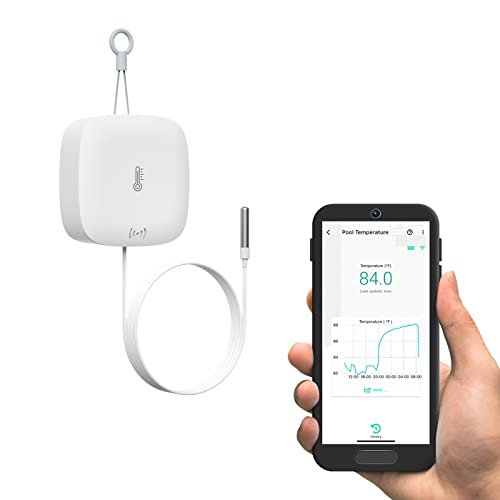
Price not listed
Our score: 8.0/10Mostly positive
Brand YoLink ASIN B08Z3XH313
Best for: Window draft and thermal monitoring
Pros
- External immersion probe included
- Rapid 500-millisecond response time
- Waterproof outdoor rated enclosure
Cons
- Cannot detect physical sash opening
- Hub required for smartphone alerts
While not a mechanical contact switch, the YoLink Weatherproof Fluid temperature sensor plays an essential diagnostic role in comprehensive window monitoring. Fenestration perimeters are the primary zone of thermal loss, seal degradation, and moisture intrusion across residential and commercial buildings. Featuring an external probe with an immersion depth of 0.98 inches, this digital waterproof sensor captures extreme high and low surface temperatures up to an upper limit of 221 °F. Powered by two included AAA batteries, the plastic-encased outdoor-rated device achieves a fast response time of 500 milliseconds with an analytical measurement resolution of 0.1°F or 0.1°C.
Deploying this sensor directly on window sills, between storm window panes, or along exterior framing reveals thermal insulation failures, drafts, and icing conditions before structural condensation causes frame rot or mold development. The unit communicates over the 900 MHz LoRa protocol, maintaining a 1/4 mile open-air wireless range with superior penetration through heavy framing materials. Setup is executed via the mobile app using Scan & Play QR code scanning, requiring a central YoLink hub for complete cloud functionality. Accounts receive five free SMS alerts per month alongside unlimited mobile push notifications, email dispatches, and audible SpeakerHub announcements when temperatures breach user-defined safety bands.
This instrument is suited for homeowners monitoring historical single-pane windows, cold-climate sashes prone to frozen condensation, or greenhouse ventilation panels where temperature swings signal open latches. It does not measure physical opening displacement or structural impact, meaning it must be paired with mechanical or vibration sensors rather than deployed as an intrusion detector. It gives way to the YS7704 and YS7707 models whenever physical open-close latch tracking is the operational objective.
- External diagnostic probe with 500-millisecond response time and 0.1-degree precision
- Waterproof outdoor construction capable of measuring surface and ambient levels up to 221 °F
- Two-way 900 MHz LoRa transmission reaching a 1/4 mile open-air wireless coverage radius
- Flexible alert dispatch incorporating automated push notifications, email alerts, and free SMS
What Sets These Models Apart
Understanding how these four devices contrast requires an analysis of their physical sensing mechanisms, wireless transmission parameters, and power delivery profiles. While all four leverage the long-range 900 MHz LoRa protocol, their form factors and internal hardware cater to distinctly separate perimeter security layers. The table below delineates these critical technical specifications as stated in their official listings.
| Model Name | Primary Sensor Technology | Maximum Wireless Range | Power Source and Voltage | Enclosure Placement |
|---|---|---|---|---|
| YoLink Door & Window Sensor | LoRa Magnetic Contact | 0.25 miles | Battery Powered, 3 volts | Indoor |
| YoLink LoRa Smart Vibration Sensor; Smart | LoRa Vibration / Shock | 400 meters | Battery Powered, Alkaline (230 volts listed) | Indoor Surface / Glass |
| Long-Range Indoor Outdoor Door Window Gate | LoRa Contact / Dry Contact Relay | the listing does not specify | AA Batteries | Indoor / Outdoor Weatherproof |
| YoLink Weatherproof Fluid | LoRa Thermal Probe (Digital) | 1/4 mile | 2 AAA Batteries | Outdoor / Waterproof |
Buying Tips for YoLink Window Sensors
When designing a complete fenestration security layout, you must evaluate the mechanical tolerances of your window frames before selecting hardware. Traditional interior casements and hung sashes maintain tight margins that accommodate standard adhesive reed switches like the YS7704. However, older timber framing, sliding aluminum doors, and outdoor shutters frequently warp or shift over seasonal humidity cycles. In these configurations, standard sensors with narrow magnetic gaps may cause false open alarms. Opting for hardware with an extended 0.7-inch sensing distance or secondary dry contact terminals prevents false dispatches and ensures reliable state changes across irregular physical gaps.
Network planning is another critical consideration when selecting between LoRa hardware and standard wireless smart home sensors. If you are comparing topologies against an alternative standard such as a eufy window sensor installation, understand that YoLink requires an operational YoLink hub connected via 2.4 GHz Wi-Fi or wired ethernet to route signals to the internet. However, a significant advantage of the YoLink architecture is YoLink Control. By taking advantage of device-to-device pairing, you can link window contact or vibration sensors directly to local sirens without internet routing. This hardens your perimeter against power failures and network disruptions, maintaining continuous siren alarms even if the central gateway loses internet connectivity.
Finally, layer your sensing technologies rather than relying on a single detection type across accessible openings. Ground-floor windows and basement window wells are susceptible to smash-and-grab intrusions where glass is shattered without the frame ever moving. Installing vibration sensors directly onto vulnerable glass panes delivers instant shock detection, while magnetic contact sensors verify whether the sash has been breached or left ajar. Pairing these intrusion tripwires with thermal monitoring sensors along sill perimeters delivers an exhaustive diagnostic barrier that protects your structural envelope against both human intruders and winter draft penetration.