DSC Alarm Systems Compared: PowerSeries Panel Kits, Keypads, and Expansion Hardware
Evaluating a comprehensive dsc alarm system comparison requires analyzing bus architecture, zone capacities, and peripheral integration across multiple hardware generations. DSC systems rely on central control units that communicate with hardwired keypads, wireless expansion transceivers, and output notification devices via multiplexed communication loops. Selecting individual components without mapping their internal communication protocols can lead to…

As Amazon Associates, we earn from qualifying purchases. This means we may receive a small commission at no extra cost to you if you click through and make a purchase.
Evaluating a comprehensive dsc alarm system comparison requires analyzing bus architecture, zone capacities, and peripheral integration across multiple hardware generations. DSC systems rely on central control units that communicate with hardwired keypads, wireless expansion transceivers, and output notification devices via multiplexed communication loops. Selecting individual components without mapping their internal communication protocols can lead to unresolvable bus supervisory errors or unaddressed system trouble conditions. Whether designing a greenfield security setup or maintaining an established wired infrastructure, understanding how core processing boards interact with peripheral modules forms the basis of a reliable deployment.
This hardware breakdown examines 6 distinct DSC components, evaluating their mechanical builds, signaling buses, power demands, and installation environments. The lineup covers a full control panel kit, legacy and modern touch-capable keypads, an IP network bridge, a wireless door transmitter, and an indoor high-output siren. By dissecting communication protocols, electrical draw limits, and peripheral roles, this guide clarifies which dsc alarm system to buy to match your exact structural layout, wiring setup, and monitoring preferences.
Which DSC Alarm Systems Should You Buy
- For complete commercial or residential infrastructure from scratch: Select the DSC HS32-119CP01 PowerSeries Neo HS2032NK Alarm, providing a main control panel, steel enclosure, power components, indoor siren, and an integrated PowerG transceiver keypad.
- For configuring and managing classic legacy Keybus installations: Deploy the DSC PowerSeries PK5500 Alarm Keypad, which provides plain-language diagnostic reporting and full 32-character custom English zone labeling.
- For graphical touch control on modern Corbus panels: Mount the DSC HS2TCHP N, featuring a 7-inch color touch display and integrated proximity credential recognition.
- For internet monitoring and smart integration on established systems: Install the EyezOn Envisalink EVL-4EZR IP Security Interface to enable voice control and remote alerts over an Ethernet connection.
- For battery-operated perimeter defense on 433MHz legacy setups: Add the DSC SECURITY WS4945 WIRELESS ALARM DOOR contact featuring internal reed and external hardwired dry-contact terminals.
- For high-output audible alerting across residential or commercial zones: Connect the SD 15W-ULF dual-tone interior siren to an available 12V DC bell circuit.
DSC PowerSeries PK5500 Alarm Keypad

Price not listed
Our score: 8.4/10Mostly positive
Brand DSC ASIN B007U7YMKU
Best for: Classic PowerSeries panel programming
Pros
- 32-character alpha display
- Integrated zone input
- Plain-text trouble readout
Cons
- Incompatible with Neo bus
- Bulky landscape footprint
The DSC PowerSeries PK5500 Alarm Keypad serves as a primary user interface and configuration terminal for legacy PowerSeries control boards. Designed with a 64-zone programmable alpha LCD screen, the unit replaces cryptic numeric trouble codes with full 32-character programmable phrases and plain-language event buffer reviews. Measuring 7 x 5 x 2 inches and weighing 9.6 ounces, the landscape-oriented keypad includes enlarged physical buttons and five dedicated function keys for one-touch commands. For installations requiring local expansion, an onboard PGM or zone terminal allows technicians to wire an auxiliary detection device or output trigger directly to the keypad backplane without routing auxiliary lines back to the primary enclosure.
In terms of system role, the dsc pk5500 keypad suits property owners and technicians maintaining classic PC1616, PC1832, or PC1864 panels that require complete installer programming access. The keypad provides eight-language display support and global partition status views, simplifying multi-partition management across complex commercial facilities. While contemporary setups might rely on app-based controls like a modern ring home security system, dedicated security hardware demands direct bus-level keypads for definitive installer menus.
However, this interface gives way to newer equipment when transitioning away from legacy Keybus hardware. Because the PK5500 communicates exclusively across classic four-wire Keybus architecture, it cannot interface with newer Corbus control panels. Users planning to upgrade to PowerSeries Neo equipment must bypass the PK5500 in favor of Neo-compatible interfaces such as the HS2TCHP N or bundled Neo LCD units.
- 64-zone programmable alpha LCD display with 32-character custom zone labels
- Integrated auxiliary terminal configurable as an input zone or low-current PGM output
- Global partition status reporting with support for 8 distinct system languages
- Modern slim-line landscape form factor featuring enlarged physical buttons
DSC HS32-119CP01 PowerSeries Neo HS2032NK Alarm

Price not listed
Our score: 9.0/10Very positive
Brand Johnson Controls ASIN B0FRYMP2TW
Best for: Complete commercial or home installations
Pros
- Complete 7-piece kit
- PowerG RF transceiver included
- Sturdy PC5003C metal cabinet
Cons
- Requires complex installer programming
- Heavy wired cabinet setup
The DSC HS32-119CP01 PowerSeries Neo HS2032NK Alarm is a 7-piece hardware bundle engineered by Johnson Controls around the dsc hs2032nk control panel. Housed in a PC5003C metal cabinet, the panel runs factory CP01 false-alarm prevention software and provides foundational infrastructure for complex wired and hybrid deployments. The package includes an HS2LCDRF9ENG alphanumeric keypad with a built-in PowerG wireless transceiver, an SD15WULF indoor sounder, a 12V 4Ah BD4-12 backup battery, and a PTD1640U transformer.
Serving as the anchor of the modern dsc powerseries neo platform, this kit is built for users establishing new installations or completely revamping obsolete equipment. The integrated PowerG transceiver inside the keypad bridges hardwired panel loops with frequency-hopping wireless sensors, providing encrypted transmission range. While basic smart hubs like a eufy security system depend on household Wi-Fi, this commercial-grade architecture isolates signaling across a dedicated wired Corbus bus and supervised RF channels.
This panel kit gives way to standalone modular accessories when an existing control panel cabinet and power infrastructure are already installed. Because configuring the HS2032NK requires cabinet mounting, power wiring, and zone loop programming, users needing only single-point sensor additions or network connectivity should look toward individual peripheral components instead.
- Central HS2032NK control panel with CP01 software inside a PC5003C metal cabinet
- Includes HS2LCDRF9ENG alphanumeric keypad featuring an integrated PowerG transceiver
- Comprehensive 7-piece kit including BD4-12 backup battery, PTD1640U transformer, and siren
- Native Corbus architecture supporting hybrid hardwired and wireless security peripherals
DSC HS2TCHP N

Buyer favouriteScored 9.4/10 or higher
Price not listed
Our score: 9.6/10Overwhelmingly positive
Brand DSC ASIN B07GX7VQRM
Best for: Modern Neo touchscreen system control
Pros
- 7-inch responsive touch interface
- Integrated proximity tag support
- Includes bracket and wiring
Cons
- Neo bus only
- Large physical depth
Bringing modern visual navigation to Corbus networks, the DSC HS2TCHP N is a dedicated 7-inch touchscreen alarm keypad designed specifically for Neo control panels. The unit, cataloged under model number HS2TCHPRO, features a clean white front bezel and provides direct touch controls for system arming, zone bypassing, and real-time status monitoring. Measuring 7 x 7 x 7 inches in package volume and utilizing a screw-in mounting bracket with included wiring leads, this keypad integrates built-in proximity card support that enables users to arm or disarm partitions instantly with compatible RFID prox tags.
The dsc hs2tchp touchscreen is built for high-traffic entryways where residential or commercial users want an intuitive graphical layout rather than traditional numeric push buttons. Its proximity credential reading eliminates manual passcode entry, which accelerates access while reducing user error during disarming sequences. While some users supplement entryway security using wireless camera systems such as blink 4 cameras, a hardwired primary keypad like the HS2TCHP N delivers constant, reliable bus supervision at the door.
Despite its graphical benefits, this touchscreen gives way to push-button keypads like the PK5500 or HS2LCDRF9ENG when complex low-level installer programming is required. Graphical interfaces are optimized for daily end-user interaction rather than deep terminal configuration. Furthermore, the listing identifies wired power with USB connectivity technology, and the device will not communicate with classic Keybus panels.
- 7-inch color touchscreen display with capacitive touch interface
- Integrated proximity tag support for swift keyless arming and disarming
- Surface screw-in mounting configuration with included bracket and wiring harness
- Dedicated visual status interface designed for DSC PowerSeries Neo systems
EyezOn Envisalink EVL-4EZR IP Security Interface

Price not listed
Our score: 8.8/10Very positive
Brand Eyezon ASIN B016WQTJ4S
Best for: IP network control and automation
Pros
- Direct bus IP communication
- Alexa voice control compatibility
- Honeywell and DSC support
Cons
- Requires wired Ethernet run
- Low operating voltage
The EyezOn Envisalink EVL-4EZR IP Security Interface is a specialized communication module designed to bridge classic hardwired control panels with modern IP networks. Operating as a bus-level client device on DSC Keybus panels and Honeywell Vista platforms, this compact 4.7 x 3.1 x 1.2-inch unit enables remote network control, motion alert reporting, and third-party smart platform integration. Powered directly via a corded electric connection operating at 1.5 volts, the module adheres securely inside the panel cabinet using self-adhesive mounting hardware, requiring no external enclosure alterations.
For owners of existing DSC systems, the eyezon envisalink evl-4ezr dsc module bridges the divide between legacy hardware and smart home voice management, featuring certified compatibility with Alexa. Rather than completely replacing an operational control board, this interface connects directly to standard panel data terminals, granting users IP-based remote arming and real-time diagnostic push alerts. Compared to localized standalone sensor arrays like a letwesaf radar motion alarm system, an Envisalink module unifies whole-home security zone reporting over Ethernet.
However, this interface relies entirely on the presence of an existing, fully functioning host panel. It does not possess onboard zone terminal blocks or autonomous alarm processing circuits, meaning it cannot function as a standalone alarm controller. Moreover, while it excels on standard legacy Keybus architectures, users running strictly encrypted Neo Corbus installations must verify module software compatibility before relying on third-party IP gateways.
- Direct bus interface compatible with DSC PowerSeries and Honeywell Vista systems
- IP network connectivity supporting Alexa voice control and real-time mobile alerts
- Compact 4.7 x 3.1 x 1.2-inch form factor with peel-and-stick self-adhesive installation
- Onboard bus communication delivering zone status updates and motion event logging
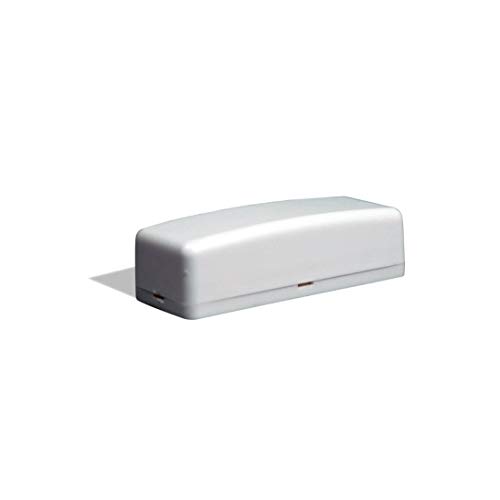
DSC SECURITY WS4945 WIRELESS ALARM DOOR
Buyer favouriteScored 9.4/10 or higher
Price not listed
Our score: 9.8/10Overwhelmingly positive
Brand DSC ASIN B000V9XTBM
Best for: Perimeter door and window sensing
Pros
- Built-in reed switch
- External contact input terminal
- Case and wall tamper switches
Cons
- Older 433MHz legacy wireless
- Conflicting listed battery specs
The DSC SECURITY WS4945 WIRELESS ALARM DOOR is a compact wireless contact and transmitter designed for perimeter barrier supervision on windows and doors. Encased in a white plastic housing weighing 2.88 ounces, the sensor incorporates both an internal reed switch and an external normally closed contact terminal. This dual-input capability allows technicians to protect standard opening frames with the internal magnet while simultaneously wiring an auxiliary hardwired magnetic loop or tamper circuit through the transmitter to save zone real estate.
System reliability is enhanced through integrated physical defense mechanisms, as the dsc ws4945 wireless sensor includes both case tamper and wall tamper switches that alert the central station if an unauthorized party attempts removal. The listing specifies lithium battery power (noting 1 CR2 or 1 CR123A battery included) and indicates remote control operation with a 65 dB audible noise rating. This transmitter is an ideal choice for expanding legacy 433MHz wireless receiver networks on classic panels without pulling additional copper cable through finished framing.
Nonetheless, this sensor gives way to PowerG devices when installing newer Neo systems. The WS4945 transmits on legacy one-way wireless protocols lacking the multichannel frequency-hopping and range capabilities of the PowerG platform built into Neo keypads like the HS2LCDRF9ENG. For greenfield Neo panel deployments, utilizing modern encrypted PowerG sensors ensures superior range and bus-level integration.
- Built-in reed switch paired with an external normally closed dry-contact input
- Dual physical tamper security with independent case and wall removal sensors
- Pre-packaged lithium battery power source designed for wireless perimeter monitoring
- Lightweight 2.88-ounce surface-mount design suitable for window and door frames
SD 15W-ULF

Price not listed
Our score: 9.0/10Very positive
Brand DSC ASIN B0041X4DKA Prime eligible
Best for: High-decibel indoor audible alerting
Pros
- Dual-tone yelp output
- UL and CUL safety certified
- Rugged ABS housing
Cons
- High 404mA surge draw
- Indoor mounting only
The SD 15W-ULF is a surface-mount, self-contained interior siren engineered to deliver piercing auditory notification during alarm activations. Built from durable white ABS plastic, the housing measures 110mm x 110mm x 55.2mm (4.33 x 4.33 x 2.17 inches) and mounts directly to flat interior wall surfaces. Rated for a 12V DC special application power supply, the unit consumes 380mA during standard operation, with a peak current draw of 392mA and a surge threshold reaching 404mA during initial sounding sequences.
Delivering a sound pressure level of 82dB at 10 feet and 90dB at 3 meters (with an audible noise ceiling reaching 108 dB in specifications), the dsc sd 15w ulf siren creates immediate awareness across residential and commercial spaces. The siren features dual-tone capability, emitting an assertive steady tone or oscillating yelp depending on wire terminal configurations. It holds formal UL and CUL regulatory listings for household burglar and fire signaling appliances, and the listing also highlights direct compatibility with Konnected Alarm Panel hardware setups.
While highly efficient, this siren is strictly an audible output transducer with no onboard logic, zone inputs, or RF transceivers. It requires direct copper wiring to a panel bell output or auxiliary relay, giving way to integrated wireless sounders when physical wire paths are impossible to route. Furthermore, because it draws up to 404mA under surge conditions, technicians must calculate panel auxiliary power budgets to prevent bus voltage dropouts during multi-siren events.
- 15-Watt dual-tone sounder supporting steady continuous or oscillating yelp tones
- High-output sound pressure reaching 82dB at 10 feet and up to 108 dB peak
- UL and CUL safety certifications for residential burglar and fire alarm installations
- Durable white ABS construction measuring 4.33 x 4.33 x 2.17 inches for surface wall mounting
What Sets These Models Apart
Understanding the architectural differences across these six components ensures proper system integration without component mismatch or electrical overload.
| Model Name | Primary Device Role | Communication Bus / Protocol | Power Source / Requirement | Physical Mounting Type |
|---|---|---|---|---|
| DSC PowerSeries PK5500 Alarm Keypad | System programming and alphanumeric display | DSC 4-Wire Keybus | Panel bus powered | Surface wall mount |
| DSC HS32-119CP01 PowerSeries Neo HS2032NK Alarm | Main control panel, cabinet, and power kit | DSC Corbus and PowerG RF | 16.5V AC transformer and 12V 4Ah battery | Metal cabinet enclosure |
| DSC HS2TCHP N | Touchscreen user interface and prox reader | DSC Corbus and USB wired | Panel bus wired | Screw-in bracket mount |
| EyezOn Envisalink EVL-4EZR IP Security Interface | IP network bridge and voice control gateway | Keybus, Honeywell Vista, Ethernet | Corded electric at 1.5V | Self-adhesive interior mount |
| DSC SECURITY WS4945 WIRELESS ALARM DOOR | Perimeter door and window contact | Legacy wireless 433MHz RF | 1 lithium battery included | Surface frame mount |
| SD 15W-ULF | Dual-tone indoor audible notification | Hardwired 12V DC bell output | 12V DC, 380mA to 404mA surge | Surface wall mount |
Buying Tips for DSC Alarm Systems
Navigating dsc alarm panel compatibility requires strict attention to the generation of your central processing board. Legacy PowerSeries panels (such as the PC1616, PC1832, and PC1864) communicate over the proprietary DSC Keybus, while the newer PowerSeries Neo platforms utilize the encrypted Corbus standard. Keypads like the PK5500 cannot be connected to a Neo panel, and touchscreen modules like the HS2TCHP N will not operate on classic Keybus controllers. Always verify panel generation before acquiring bus-powered user interfaces or add-on modules.
Wireless expansion introduces another vital distinction between legacy 433MHz peripherals and modern PowerG devices. Sensors such as the WS4945 rely on older one-way RF transmissions that require a dedicated 433MHz wireless receiver or an RF-enabled legacy keypad. Conversely, Neo systems leverage two-way frequency-hopping PowerG transceivers built directly into keypads like the HS2LCDRF9ENG. If you are upgrading from an older system to Neo, legacy wireless sensors will not communicate with PowerG transceivers unless a dedicated legacy wireless translator module is introduced.
Finally, always calculate cumulative auxiliary electrical draw before expanding your system. The central control panel provides a limited current budget across its auxiliary and bell output terminals. High-output sirens like the SD 15W-ULF draw up to 404mA during initial surge activation, which quickly depletes available panel reserves when paired with touchscreens and network interfaces. When calculated current draw approaches panel limits, incorporate an auxiliary power supply board backed by a dedicated standby battery.