Blade Material in Kayak Paddles: What It Is and Is It Worth It?
Blade material explained helps you choose the right fiberglass paddle. We compare published specs on weight, stiffness, and durability for 6 models.

As Amazon Associates, we earn from qualifying purchases. This means we may receive a small commission at no extra cost to you if you click through and make a purchase.
As an Amazon Associate we earn from qualifying purchases. Links on this page are affiliate links.
Blade Material Explained For Kayaks
Blade material explained helps you understand how your paddle performs in the water. The blade is the part that catches the water. Its construction affects weight, stiffness, and durability. You care because these factors determine efficiency and comfort during long paddling sessions.
Fiberglass is a common choice for mid-range paddles. This material blends glass fibers with resin. The result is a blade that is lighter than plastic but heavier than carbon. It offers a good balance between cost and performance. Most listings label this simply as fiberglass or composite.
Weight matters for fatigue. A lighter blade reduces strain on your shoulders and wrists. Fiberglass blades typically weigh between twenty and thirty grams per blade. This is significantly less than basic polypropylene plastic. You will notice the difference after several hours on the water.
Stiffness is the next key factor. Stiffer blades transfer more power from your stroke to the boat. They flex less under load. Fiberglass provides moderate stiffness. It is not as rigid as carbon fiber. However, it is more durable than carbon. It resists cracking from accidental impacts with rocks or docks.
Durability is a practical concern. Fiberglass blades can dent or chip. They rarely shatter completely. This makes them suitable for mixed use. You might paddle in calm lakes or navigate shallow rivers. The material holds up well against abrasion. It does not require special maintenance.
Value is subjective. If you paddle frequently, the weight savings justify the cost. If you paddle occasionally, plastic might suffice. Fiberglass sits in the middle. It offers improved performance without the high price of premium materials. Check the product description for specific weight and construction details. Look for terms like woven glass or epoxy resin. These indicate quality construction. Avoid vague terms like reinforced plastic. They often mask lower-grade materials. Choose based on your paddling style and budget. The right blade material enhances your experience.
Blade Material: Fiberglass Options
Fiberglass
Fiberglass blades balance stiffness and durability. They are heavier than carbon but lighter than plastic. This material absorbs vibration, reducing fatigue on long tours. You get a responsive stroke without the high cost of premium composites. The trade-off is slightly more weight, which matters over many miles. It suits touring and recreational paddlers seeking performance. The Werner Camano 240cm uses this for a stiff blade. It is practical for those prioritizing longevity and consistent performance in varied conditions.
Adjustable Length
Adjustable length allows fine-tuning between 220 and 240 cm. This fits different kayak widths and paddler heights. You change the length to match your torso and cockpit size. It offers versatility for shared gear or growing children. The trade-off is added mechanical complexity and potential weight. The Wilderness Systems Pungo Glass Adjustable is a top pick here. It suits paddlers who value adaptability. The mechanism ensures a secure fit during vigorous strokes. This feature is key for touring kayakers needing precise control.
2-Piece
Two-piece designs split the shaft for easy transport. You detach the blades from the shaft for storage. This fits car trunks and small boats better than one-piece models. The trade-off is a joint that can feel less rigid than solid shafts. The Werner Camano and Aqua-Bound Tango use this design. It suits travelers and those with limited storage. The connection points are engineered for stability during use. You gain convenience without sacrificing significant performance for most paddling styles.
Who Should Buy Fiberglass Blades
Who needs it
You should choose fiberglass blades if you paddle regularly for more than two hours at a time. The material absorbs vibration better than stiffer composites, which protects your wrists and shoulders from fatigue. This makes it ideal for touring or recreational paddling where comfort matters more than speed. If you value a responsive stroke without the premium price tag, this is your best option. It offers a middle ground between heavy plastic and expensive carbon. You get good durability for the cost. The slight weight increase is negligible for casual use. You will appreciate the balanced feel in the water. It suits those who want reliability without breaking the bank. It is perfect for intermediate paddlers seeking performance upgrades.
Who can skip it
Skip fiberglass if you race or prioritize lightweight gear. Carbon fiber blades are significantly lighter and stiffer, offering better energy transfer for every stroke. If you paddle competitively or cover long distances quickly, the extra weight of fiberglass will slow you down. You might also skip this if you are on a tight budget. High-density polyethylene plastic blades are cheaper and more durable for rough use. They withstand bumps against rocks and docks better than composite materials. Choose plastic if you are a beginner learning technique or paddle in rocky environments. The stiffness of fiberglass may feel too sensitive for your needs. Prioritize durability or speed over the balanced feel this material provides.
Kayak Blade Glossary
Blade Material
The substance used to construct the paddle blade, such as plastic, fiberglass, or carbon fiber. This choice directly impacts the weight, stiffness, and overall durability of your paddle.
Stiffness
How much the blade flexes under pressure. High stiffness transfers more power to the water, while some flex can absorb vibration for a smoother stroke on long trips.
Weight
The mass of the paddle. Lighter blades reduce arm fatigue over time. Heavier materials like plastic are durable but require more effort to lift and move through the air.
Fiberglass
A composite material that balances stiffness and durability. It is heavier than carbon but lighter than plastic, offering a responsive stroke and better vibration absorption for regular paddlers.
Vibration Damping
The ability of the blade material to absorb shock from water impact. This feature reduces strain on your wrists and shoulders, making long tours more comfortable and less tiring.
Efficiency
How effectively the blade moves the kayak forward. Stiffer, lighter blades typically offer higher efficiency by transferring more of your energy into forward motion rather than flexing or sloshing.
Touring
Paddling for extended distances or multiple hours. This activity often benefits from materials that reduce fatigue, such as fiberglass, which provide a good balance of performance and comfort.
Fatigue
Physical tiredness in your muscles, particularly in the arms and shoulders. Choosing the right blade material helps minimize fatigue by optimizing weight and vibration absorption during your paddle session.
| # | Product | Best for | Price |
|---|---|---|---|
| 1 | Wilderness Systems Pungo Glass Adjustable Paddle | Recreation and touring kayakers needing adjustable length | |
| 2 | Werner Camano 240cm Fiberglass Kayak Paddle | Touring paddlers needing adjustable feathering | |
| 3 | Wilderness Systems Tarpon Adjustable Fiberglass Paddle | Adjustable touring and recreation paddling | |
| 4 | Wilderness Systems Apex Glass Adjustable Paddle | Recreational and touring paddlers seeking adjustability | |
| 5 | Aqua-Bound Tango 240 cm Fiberglass Paddle | Recreational paddlers seeking lightweight performance | |
| 6 | Z&J Sport 6.8 ft Bent Shaft Kayak Paddle | Paddlers seeking wrist comfort and adjustability |
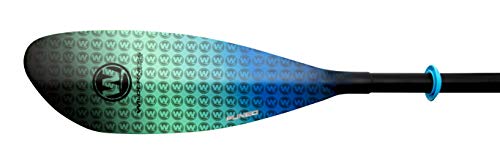
Wilderness Systems Pungo Glass Adjustable Paddle
Best for: Recreation and touring kayakers needing adjustable length
- Blade Material
- Fiberglass
- Length
- 220-240 cm
- Shaft Material
- 50% carbon/50% fiberglass
- Activity
- Touring, Recreation
- Features
- Adjustable Length
- Dimensions
- 95 × 8 × 1 inches
The Wilderness Systems Pungo Glass is a fiberglass-blade paddle built for touring and recreation. It features a 50% carbon and 50% fiberglass shaft for reduced weight and fatigue. The fiberglass composite blade offers durable power transfer. You get an adjustable length ranging from 220 cm to 240 cm, allowing you to customize the reach for your kayak width and paddling style.
- Fiberglass composite blade for durable power transfer
- 50% carbon and 50% fiberglass shaft reduces weight
- Adjustable length from 220 cm to 240 cm
- Designed to minimize flutter and fatigue
- Fiberglass blade is heavier than carbon options
- Shaft contains only 50% carbon fiber content
- Maximum length is 240 cm, limiting reach for larger kayaks
- You want an adjustable paddle length for different boats
- You prefer a fiberglass blade for durability
- You are paddling a touring or recreation kayak
- You need a full carbon shaft for maximum stiffness
- You require a fixed length under 220 cm
- You are looking for a feathered blade design
Verdict: Wilderness Systems Pungo Glass Adjustable is a practical choice for paddlers who value adjustability and durability. It fits you well if you paddle a touring or recreation kayak and want to fine-tune the length between 220 and 240 cm.

Werner Camano 240cm Fiberglass Kayak Paddle
Best for: Touring paddlers needing adjustable feathering
- Blade Material
- Fiberglass
- Length
- 240 cm
- Shaft Material
- Carbon Fiberglass Blend
- Weight
- 761g (26.75oz)
- Shaft Type
- Straight
- Piece Count
- 2 Piece
The Werner Camano is a two-piece touring paddle with a fiberglass blade and a carbon-fiberglass blend shaft. It weighs 761 grams and features a 240 cm length with a low-angle blade design. The adjustable ferrule allows 0° to 60° feather adjustments. This setup suits paddlers seeking a stiff, stable stroke for recreation or touring.
- Lightweight 761 gram build
- Adjustable 0° to 60° feather angle
- Stiff fiberglass blade with dihedral design
- Carbon-fiberglass blend shaft for strength
- Heavier than carbon-only options at 761 grams
- Limited to standard or small shaft diameters
- Two-piece design adds ferrule complexity
- You want an adjustable feather angle
- You prefer a low-angle touring stroke
- You need a durable fiberglass blade
- You require a one-piece solid shaft
- You need a featherless straight shaft
- You want a shaft smaller than 6.5 inches hand length
Verdict: Werner Camano 240cm Fiberglass Paddle fits touring paddlers who value adjustable feathering and a stiff fiberglass blade. It delivers a stable stroke for those who prioritize durability over the absolute lightest weight.

Wilderness Systems Tarpon Adjustable Fiberglass Paddle
Best for: Adjustable touring and recreation paddling
- Blade Material
- Fiberglass
- Length
- 220-240 cm
- Shaft Material
- Carbon/Fiberglass
- Blade Style
- Dihedral asymmetric
- Activity
- Touring, Recreation
- Features
- Adjustable Length
The Wilderness Systems Tarpon features a fiberglass blade and a carbon/fiberglass shaft. Its 640 cm2 dihedral asymmetric blade offers responsive control. The adjustable length ranges from 220 to 240 cm. This setup suits touring and recreation paddlers. You get a durable blade that reduces fatigue. The adjustable lever fits various stroke styles.
- 640 cm2 fiberglass blade for responsive control
- Dihedral asymmetric blade for smooth strokes
- Adjustable length from 220 to 240 cm
- Carbon/fiberglass shaft for reduced weight
- Fiberglass blade is less stiff than carbon options
- Asymmetric design requires learning proper technique
- You want adjustable length for different kayaks
- You prefer a durable fiberglass blade
- You are touring or recreational paddler
- You need a fixed carbon blade
- You prefer symmetric blade design
- You require a lightweight carbon shaft only
Verdict: Wilderness Systems Tarpon 220-240 cm suits paddlers who value adjustability and durability. It fits touring and recreation use well.

Wilderness Systems Apex Glass Adjustable Paddle
Best for: Recreational and touring paddlers seeking adjustability
- Blade Material
- Fiberglass
- Length
- 220-240 cm
- Shaft Material
- 50% carbon/50% fiberglass
- Weight
- 32 oz
- Activity
- Touring, Recreation
- Features
- Adjustable Length
The Wilderness Systems Apex Glass is a fiberglass blade paddle designed for recreational and touring kayaks. It features a 610 cm2 foam core blade with a carbon reinforced edge. The shaft is a 50/50 mix of carbon and fiberglass, weighing 32 oz. Length adjusts from 220 cm to 240 cm. This setup aims for crisp, flutter-free strokes. It suits paddlers seeking a balance of weight and control in various water conditions.
- Adjustable length from 220 cm to 240 cm
- Lightweight 32 oz total weight
- Fiberglass foam core blade with carbon edge
- 50% carbon / 50% fiberglass shaft
- Heavier 32 oz build compared to all-carbon options
- Shaft is only half carbon, not full carbon fiber
- Single blade size of 610 cm2
- You want an adjustable length for versatility
- You paddle in recreational or touring conditions
- You prefer a fiberglass blade for durability
- You need a full carbon fiber shaft
- You require multiple blade size options
- You prioritize the absolute lightest weight possible
Verdict: Wilderness Systems Apex Glass Paddle fits paddlers who value adjustable length and a durable fiberglass blade. It offers a practical weight for touring, though the half-carbon shaft adds mass compared to premium all-carbon models.

Aqua-Bound Tango 240 cm Fiberglass Paddle
Best for: Recreational paddlers seeking lightweight performance
- Blade Material
- Fiberglass
- Length
- 240 cm
- Shaft Material
- T-700 carbon
- Weight
- 26 ounces
- Piece Count
- 2 Piece
- Blade Style
- Low angle
The Aqua-Bound Tango uses compression-molded fiberglass blades paired with a T-700 carbon shaft. This 240 cm low-angle paddle weighs 26 ounces. The 620 sq. cm blade size provides a balance of power and speed. You get a two-piece design for easier transport. This setup suits recreational and touring kayakers who want lightweight performance without the high cost of full carbon blades.
- T-700 carbon shaft reduces overall weight
- Compression-molded fiberglass blades offer durability
- 26-ounce weight supports low-effort paddling
- Two-piece design allows for compact storage
- 26-ounce weight is slightly heavier than full carbon options
- Fiberglass blades are less stiff than carbon alternatives
- You want a lightweight shaft with durable blades
- You need a two-piece paddle for travel
- You prefer low-angle paddling techniques
- You require the absolute lightest paddle available
- You need a one-piece shaft for maximum stiffness
- You prefer high-angle racing blade shapes
Verdict: Aqua-Bound Tango 240cm Fiberglass Paddle fits paddlers who value a carbon shaft but want to save money on the blades. It is a solid choice for touring and recreation.

Z&J Sport 6.8 ft Bent Shaft Kayak Paddle
Best for: Paddlers seeking wrist comfort and adjustability
- Blade Material
- Fiberglass
- Length
- 200-210 cm
- Shaft Material
- Carbon
- Weight
- about 820 g (26.5 oz)
- Shaft Type
- Bent
- Piece Count
- 2-piece
This Z&J Sport paddle uses a fiberglass blade paired with a carbon shaft. It weighs about 820 grams and features a bent shaft design with an asymmetrical blade. The adjustable length ranges from 200 cm to 210 cm. It suits touring and recreational paddlers. The bent shaft reduces wrist strain during long sessions. The fiberglass blade offers durability for daily use.
- Bent shaft design reduces wrist fatigue
- Fiberglass blade reinforced with PMI foam
- Adjustable length from 200 cm to 210 cm
- Includes a protective 50.4-inch bag
- Heavier at 820 grams than many carbon options
- Shorter maximum length of 210 cm
- Fixed bent shaft geometry limits versatility
- You want to reduce wrist strain
- You need an adjustable length
- You prefer fiberglass durability
- You need a straight shaft
- You require a length over 210 cm
- You want a lighter carbon blade
Verdict: Z&J Sport Bent Shaft Kayak Paddle fits paddlers who prioritize wrist comfort and adjustable length. It is a solid choice for touring on calm waters.
Specifications side by side
| Spec | Wilderness Systems Pungo Glass Adjustable Paddle | Werner Camano 240cm Fiberglass Kayak Paddle | Wilderness Systems Tarpon Adjustable Fiberglass Paddle | Wilderness Systems Apex Glass Adjustable Paddle | Aqua-Bound Tango 240 cm Fiberglass Paddle | Z&J Sport 6.8 ft Bent Shaft Kayak Paddle |
|---|---|---|---|---|---|---|
| Length | 220-240 cm | 240 cm | 220-240 cm | 220-240 cm | 240 cm | 200-210 cm |
| Shaft Material | 50% carbon/50% fiberglass | Carbon Fiberglass Blend | Carbon/Fiberglass | 50% carbon/50% fiberglass | T-700 carbon | Carbon |
| Blade Material | Fiberglass composite | Fiberglass | Fiberglass | Fiberglass foam core | Fiberglass | Fiberglass |
| Weight | – | 761g (26.75oz) | – | 32 oz | 26 ounces | about 820 g (26.5 oz) |
| Shaft Type | – | Straight | – | – | – | Bent |
| Piece Count | – | 2 Piece | – | – | 2 Piece | 2-piece |
| Blade Style | – | Low Angle | Dihedral asymmetric | – | Low angle | Asymmetrical |
| Activity | Touring, Recreation | Touring, Recreation | Touring, Recreation | Touring, Recreation | – | Touring, Recreation |
| Features | Adjustable Length | 2-Piece | Adjustable Length | Adjustable Length | 2-Piece | – |
| Color | Galaxy | Gradient: Citrus | Mango | Blue/Black | Fuego | Red Fiber |
| Dimensions | 95 × 8 × 1 inches | 53 × 8 × 3 inches | 58 × 9 × 3 inches | 1 × 1 × 1 inches | 55 × 8.75 × 3 inches | – |
| Size | 220-240 cm | 240 cm (Standard Shaft Diameter) | 220-240 cm | 220-240cm | 240 cm | Bent-200-210cm |
| Model | 8070206 | CA_2_F11_240_4240_RA | 8070239 | 8070204 | Aqua-Bound | – |
Frequently asked questions
Does fiberglass blade material absorb vibration?
Yes, fiberglass absorbs vibration better than stiffer composites like carbon. This reduces fatigue on your wrists and shoulders during long tours. The Werner Camano 240cm Fiberglass Paddle features a stiff fiberglass blade that delivers a stable stroke for paddlers who prioritize durability over the absolute lightest weight.
Can I adjust the length of a fiberglass paddle?
Several fiberglass models offer adjustable length settings. The Wilderness Systems Pungo Glass Adjustable Paddle allows you to fine-tune the length between 220 and 240 cm. The Wilderness Systems Tarpon Adjustable Fiberglass Paddle also provides adjustable touring and recreation paddling options with a similar 220-240 cm size range.
Is fiberglass suitable for touring kayaks?
Fiberglass is suitable for touring kayaks because it balances stiffness and durability. The Werner Camano 240cm Fiberglass Kayak Paddle is designed for touring paddlers. It delivers a stable stroke for those who value durability. The Z&J Sport Bent Shaft Kayak Paddle is also a solid choice for touring on calm waters.
How wide are fiberglass kayak paddle blades?
Blade widths vary by model to suit different paddling styles. The Werner Camano 240cm Fiberglass Kayak Paddle has an eight-inch width. The Aqua-Bound Tango 240 cm Fiberglass Paddle offers an 8.75-inch width. The Wilderness Systems Tarpon Adjustable Fiberglass Paddle features a wider nine-inch blade for more power.
Are fiberglass paddles heavy compared to other materials?
Fiberglass blades are heavier than carbon but lighter than plastic. They provide a responsive stroke without the high cost of premium composites. The Werner Camano 240cm Fiberglass Kayak Paddle weighs 1.68 pounds. The Aqua-Bound Tango 240 cm Fiberglass Paddle fits paddlers who value a carbon shaft but want to save money on the blades.
What is the best fiberglass paddle for recreation?
The Wilderness Systems Pungo Glass Adjustable Paddle is a practical choice for recreation and touring kayakers. It fits you well if you need to fine-tune the length between 220 and 240 cm. The Wilderness Systems Apex Glass Adjustable Paddle is another option for recreational and touring paddlers seeking adjustability.
Do fiberglass paddles come in two-piece designs?
Yes, some fiberglass paddles feature a two-piece design for easier transport. The Werner Camano 240cm Fiberglass Kayak Paddle is a two-piece model with adjustable feathering. The Aqua-Bound Tango 240 cm Fiberglass Paddle is also a two-piece paddle. These designs help paddlers who value portability alongside fiberglass blade performance.